“To keep siblings together can be an act of love.
To separate them can be one too.”
Woodhouse & Howes (2026)
Publications

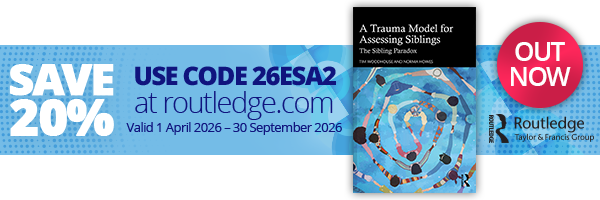
Foundations, Trauma, and the Child’s Voice in Sibling Relationships : The Sibling Paradox
Tim Woodhouse, Norma Howes
Foundations, Trauma, and the Child’s Voice in Sibling Relationships is the essential foundation for trauma-informed assessments of sibling relationships in care and permanence planning. This book provides professionals with the theoretical, legal, and emotional tools to challenge their assumptions and understand the child’s context. With rich case material and deep psychological insight, this volume offers a new lens through which to understand what children say, and don’t say, about their siblings, and why these insights are crucial to ethical decision-making. The authors’ other publication A Trauma Model for Assessing Siblings develops from this text to deliver a rigorous, trauma-informed framework for assessing and supporting sibling relationships in a range of care-giving settings. It is an invaluable guide for therapists, counsellors, social workers, child welfare professionals, and indeed anyone involved in making decisions regarding the placement of children.
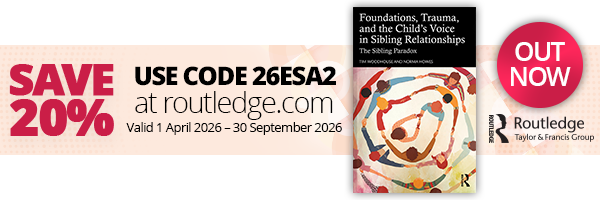

A Trauma Model for Assessing
Siblings : The Sibling Paradox
Tim Woodhouse, Norma Howes
A Trauma Model for Assessing Siblings delivers a rigorous, trauma-informed framework for assessing and supporting sibling relationships in a range of caregiving settings. Drawing on decades of therapeutic and social work practice, this volume offers actionable guidance, tools, and insights, culminating in a complete assessment model for use in court, care planning, and therapeutic settings. Building upon the foundational understanding of trauma-informed assessments of sibling relationships in care and permanence planning within the authors’ other publication, Foundations, Trauma, and the Child’s Voice in Sibling Relationships, it addresses when and how to separate siblings, when to keep them together, and how to support ongoing contact in a child-centered, developmentally informed way. An invaluable guide for therapists, counsellors, social workers, child welfare professionals and indeed anyone involved in making decisions regarding the placement of children.
Other Publications